SOLUTIONS
Surface
treatment
Washing and degreasing in the industrial process
As the definition says, surface treatment or surface finishing is a broad range of industrial processes that alter the surface of a manufactured item to achieve a certain property.
We can classify different surface treatments in four groups:
- Pre-treatment prepares the parts for next step in the process. The most common is process of cleaning such as degreasing – which can be an ultrasonic degreasing – or pickling with or without ultrasound.
- Post-treatment finalizes the process, such as passivation or colouring.
- Changing the metal surface by chemical reaction and acting as the final coating, such as black oxidising (blackening), phosphating, chromating or passivation.
- Varying the metal surface thanks to an action to remove paint or surface removal, such as etching, chemical milling or stripping or ultrasonic paint stripping.
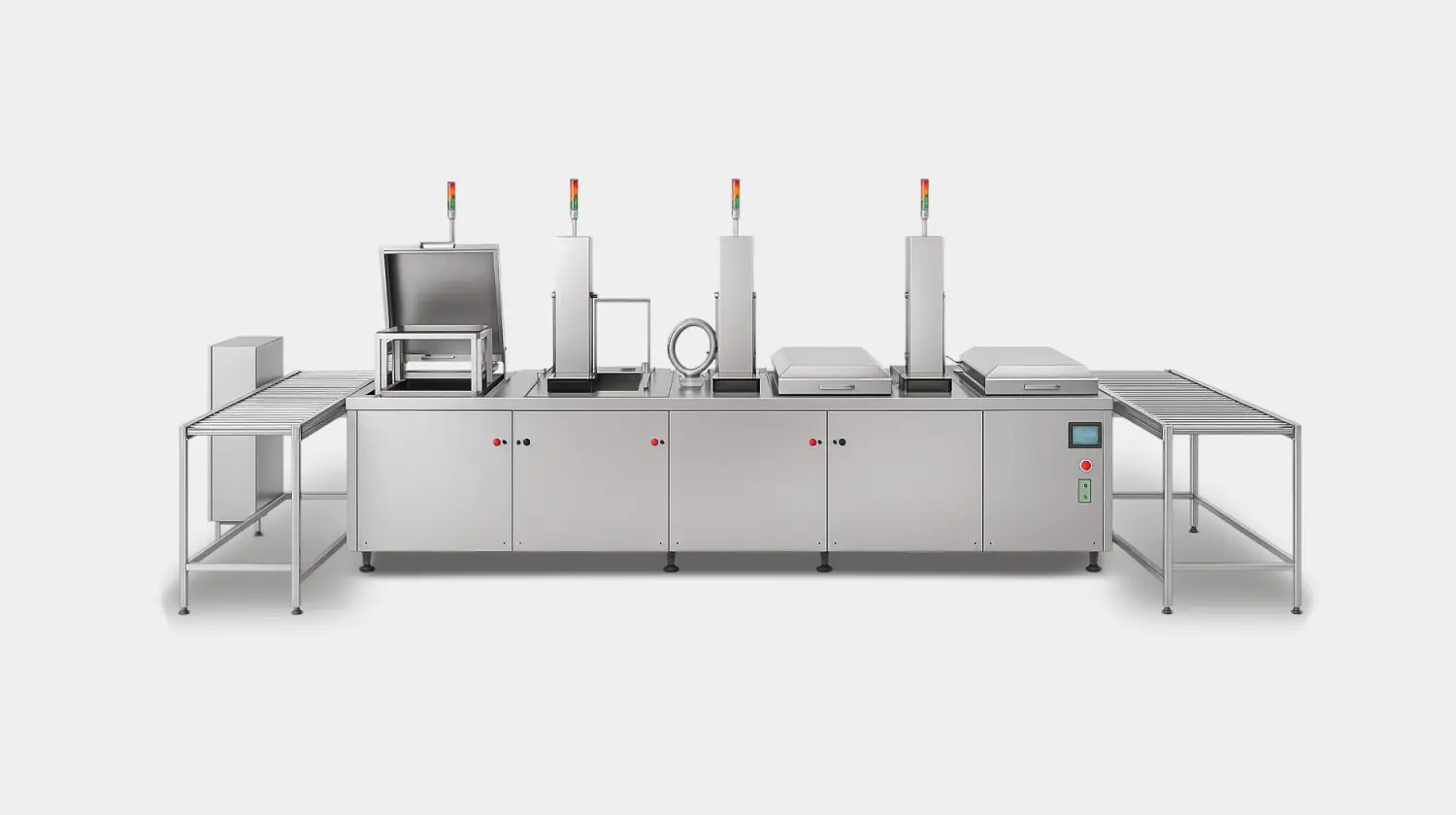
Ultratecno offers the best washing, degreasing and stripping ultrasonic machines for treatment of surfaces, improving cleaning process and final product quality.

PDF – 1.7KB
Increase the quality of your items
Microscopic cleaning quality
Homogeneous results
Energy saving
Detergents and chemicals
Savings in water
Safety and health
Parameters that influence
temperature
Temperature increases (80-90ºC) in a liquid medium raise the vapor pressure and facilitate bubble formation (cavitation). This results in greater cleaning energy.
FREQUENCY
Determine the size of the bubbles generated during cavitation. High levels of soiling require lower frequencies, with greater grinding power. High frequencies are used for finishing applications or cleaning delicate items (optics, jewelry).
Chemical Additives
Each application requires a customized chemical product and concentration level, based on factors such as operating temperature, type of soiling, cleaning time, and the material of the parts being treated. Ultrasound enhances the cleaning effect of the cleaning agents, reducing their consumption.